
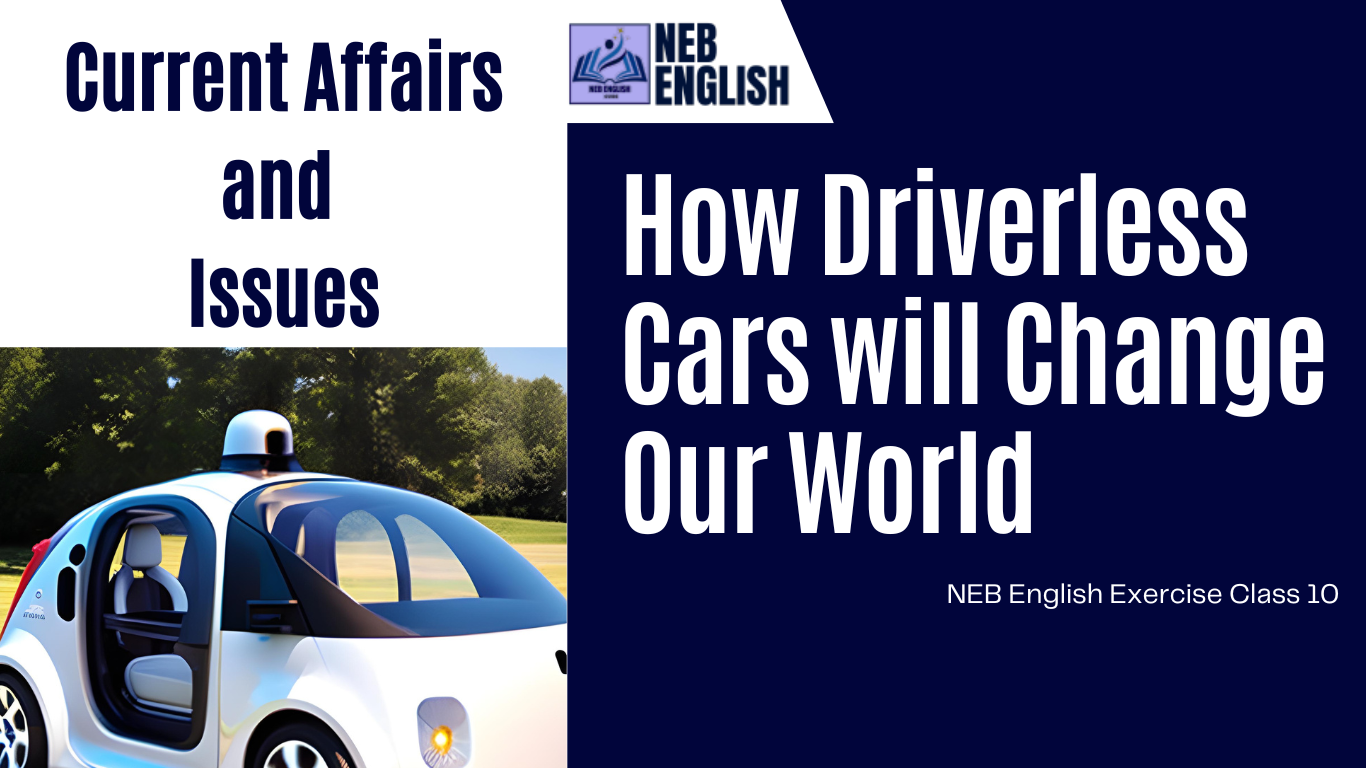
The text discusses the developments in driverless technology, including the Waymo One robotaxi service in Phoenix, Arizona. While the potential benefits of autonomous vehicles are numerous, including improved safety and sustainability, there are still significant challenges to be overcome, such as operating safely in complex human environments, public perception, and regulatory issues. The next two years will be focused on addressing these challenges, including testing at facilities such as the Mcity Test Facility at the University of Michigan. Ultimately, the vision is for completely driverless vehicles that can be used anywhere in the world.
Reading Text
It's late at night in the Metro area of Phoenix, Arizona. Under the artificial glare of street lamps, a car can be seen slowly approaching. Active sensors on the vehicle radiate a low hum. A green and blue 'W' glows from the windscreen, giving off just enough light to see inside – to a completely empty driver seat.
The wheel navigates the curb steadily, parking as an arrival notification pings on the phone of the person waiting for it. When they open the door to climb inside, a voice greets them over the vehicle's sound system. "Good evening, this car is all yours – with no one upfront," it says.
This is a Waymo One robotaxi, hailed just 10 minutes ago using an app. The open use of this service to the public, slowly expanding across the US, is one of the many developments signalling that driverless technology is truly becoming a part of our lives.
The promise of driverless technology has long been enticing. It has the potential to transform our experience of commuting and long journeys, take people out of high-risk working environments and streamline our industries. It's key to helping us build the cities of the future, where our reliance and relationship with cars are redefined – lowering carbon emissions and paving the way for more sustainable ways of living. And it could make our travel safer. The World Health Organization estimates that more than 1.3 million people die each year as a result of road traffic crashes. "We want safer roads and less fatalities. Automation ultimately could provide that," says Camilla Fowler, head of automated transport for the UK's Transport Research Laboratory (TRL).
The Human Factor Challenge:
"But in order for driverless technology to become mainstream, much still needs to change. Driverless vehicles should be a very calm and serene way of getting from A to B. But not every human driver around it will be behaving in that way," says David Hynd, chief scientist for safety and investigations at TRL.
"It's got to be able to cope with human drivers speeding, for instance, or breaking the rules of the road." And that's not the only challenge. There's regulation, rethinking the highway code, public perception, improving the infrastructure of our streets, towns, cities, and the big question of ultimate liability for road accidents. "The whole insurance industry is looking into how they're going to deal with that change from a person being responsible and in charge to the vehicle doing that," says Richard Jinks, vice president of commercial at Oxfordshire-based driverless vehicle software company Oxbotica, which has been testing its technology in cars and delivery vehicles at several locations across the UK and Europe.
The ultimate vision experts are working towards is of completely driverless vehicles, both within industry, wider transport networks, and personal-use cars, that can be deployed and used anywhere and everywhere around the world. But with all these hurdles in place, what exactly does the next 10 years have in store for autonomous vehicles?
Two years from now
The biggest hurdle for those in the driverless technology industry is how to get the cars to operate safely and effectively in complex and unpredictable human environments. Cracking this part of the puzzle will be the major focus of the next two years.
At the Mcity Test Facility at the University of Michigan, experts are addressing this. The world's first purpose-built testing ground for autonomous vehicles, it's a mini-town of sorts, made up of 16 acres of road and traffic infrastructure. It includes traffic signals and signs, underpasses, building facades, tree cover, home and garage exteriors for testing delivery and ride-hailing, and different terrains such as road, pedestrian walkways, railway tracks, and road markings which the vehicles must navigate. It's here that experts test scenarios that even the most experienced of drivers may be pressed to handle, from children playing in the street to two cars trying to merge on a junction at the same time.
Glossary
| Word & IPA | Definition |
|---|---|
| Metro /ˈmɛtroʊ/ | A rapid transit system, used for transportation in urban areas. |
| Artificial /ɑrˈtɪfɪʃl/ | Produced by human skill rather than natural processes. |
| Glare /ɡlɛr/ | A harsh, bright, dazzling light. |
| Radiate /ˈreɪdiˌeɪt/ | Emit energy, light, or heat in the form of rays or waves. |
| Windscreen /ˈwɪndˌskrin/ | Transparent screen at the front of a vehicle to protect passengers. |
| Navigates /ˈnævəɡeɪts/ | To plan and direct the course of a vehicle. |
| Robotaxi /ˈroʊbəʊtæksi/ | Autonomous vehicle designed to operate as a taxi without a human. |
| Enticing /ɪnˈtaɪsɪŋ/ | Attractive or tempting. |
| Commuting /kəˈmjuːtɪŋ/ | Traveling to and from work or school on a regular basis. |
| Streamline /ˈstriːmˌlaɪn/ | To make more efficient by simplifying processes. |
| Reliance /rɪˈlaɪəns/ | Dependence on or trust in something. |
| Emissions /ɪˈmɪʃənz/ | Production and discharge of something (gases). |
| Sustainable /səˈsteɪnəbl/ | Maintained without depleting natural resources. |
| Fatalities /fəˈtælətiz/ | Deaths caused by accidents. |
Exercises
A. Vocabulary Matching
Show Vocabulary Answers
- glare: ii. an intense blinding light
- curb: i. a stone edging to a pavement or raised path
- hail: i. to call somebody in order to attract their attention
- commute: ii. to travel regularly between workplace and home
- serene: i. calm and peaceful
- liability: ii. the state of being legally responsible for something
- deploy: ii. to use something effectively
- autonomous: i. a vehicle that has the technology to drive itself
- perception: ii. the ability to understand the true nature of something
B. Choose the Correct Alternatives
- a. One features of automated cars: iii. They have their own voice to welcome people.
- b. Driverless technology is widely used in: i. the USA.
- c. Positive impact on the environment: ii. it reduces carbon production.
- d. Problem with driverless technology: ii. it cannot deal with human drivers.
- e. One of the biggest challenges: i. its safety from the human environment.
- f. Automated technology developed so far: ii. partly trustworthy.
C. Question and Answers
a. Mention any three features of the driverless car.
i. It can sense the surrounding environment through sensors and cameras.
ii. It can make decisions on its own based on the data it collects.
iii. It can communicate with other vehicles and infrastructure to optimize driving.
b. Describe the benefits of driverless technology.
c. What, according to Camilla Fowler, is the special advantage of automated vehicles?
d. What are the problems with driverless vehicles in David Hynd's view?
- The technology is not yet advanced enough to handle all situations, such as adverse weather conditions or unexpected obstacles.
- There is a lack of public trust in the technology, which may lead to resistance to its implementation.
- The potential for job loss in the transportation industry.
e. What are scientists doing to make driverless technology safer?
f. Do you think driverless technology is safer than human-controlled driving? Why?
AI Applications in Different Areas
AI has been used in healthcare for diagnosing diseases, predicting patient outcomes, and recommending treatments. AI-powered tools can analyze vast amounts of medical data and assist doctors in making more accurate and informed decisions. It helps in disease diagnosis, drug discovery, and personalized medicine.
Area 2: FinanceAI has been used in finance for fraud detection, credit scoring, and investment analysis. AI algorithms can identify patterns that humans might miss. They automate tasks such as loan approvals and management, making predictions about market trends which save costs and reduce risk.
Area 3: Transportation/LogisticsSelf-driving cars use AI algorithms to process sensor data to navigate roads. AI is also used in logistics to optimize shipping routes and reduce delivery times, which improves safety and reduces traffic congestion, saving lives and reducing carbon emissions.
Reported Speech
A. Matching Direct to Reported Speech
| Direct Speech | Reported Speech |
|---|---|
| Khushi said, "I go to school every day by bus." | Khusi said that she went to school every day by bus. |
| Karma said to me, "I am sorry for coming late." | Karma apologised for coming late. |
| Susan says, "I will leave for Bhanu next week." | Susan says that she will leave for Bhanu the following. |
| Tshering said, "I will surely meet you this Saturday." | Tshering promised me to meet that Saturday. |
| "The bus leaves at six," said the agent. | The agent informed us that the bus left at six. |
| "I have already finished my project work," said She. | She said that she had already finished her project work. |
| "I work from home these days," said Yanjal. | Yanjal said that he worked from house those days. |
B. Complete with Correct Reporting Verbs
- "I broke the mirror." He admitted that he had broken the mirror.
- "I'd go and see a doctor if I were you," Pemba advised me to see a doctor.
- "I will send you out if you make a noise again," said the librarian. The librarian warned me not to make a noise again.
- "I can come and help you plant rice," said Raman. Raman offered to help me plant rice.
- "The classes start from next week," said the assistant. The assistant informed us that the classes start from the following week.
- Sonam said to me, "Thank you so much for your help." Sonam thanked me for my help.
- "OK, I will return your money by Saturday," said Prakriti. Prakriti promised to return my money by Saturday.
- "I will really work hard and score good grades," said Anupam. Anupam agreed to work hard and get good grades.
- "I am sorry for coming late," said the speaker. The speaker apologised for coming late.


